
Car & Classic Vehicle Winter Storage in Niagara: Rates, Salt Prep & Storage Checklist (2026–2027)
Complete 2026–2027 guide to car and classic vehicle winter storage in Niagara. Compare enclosed drive-up vs outdoor rates, learn Niagara salt neutralization steps, and follow our 7-step checklist.
Sign Up for 6 Months, Get 1 Month FREE!
Store your sports car, convertible, seasonal ride, or utility trailer securely through the off-season. Pay for 5 months and your 6th month is completely free.
Key Takeaways: Niagara Winter Vehicle Storage (At-A-Glance)
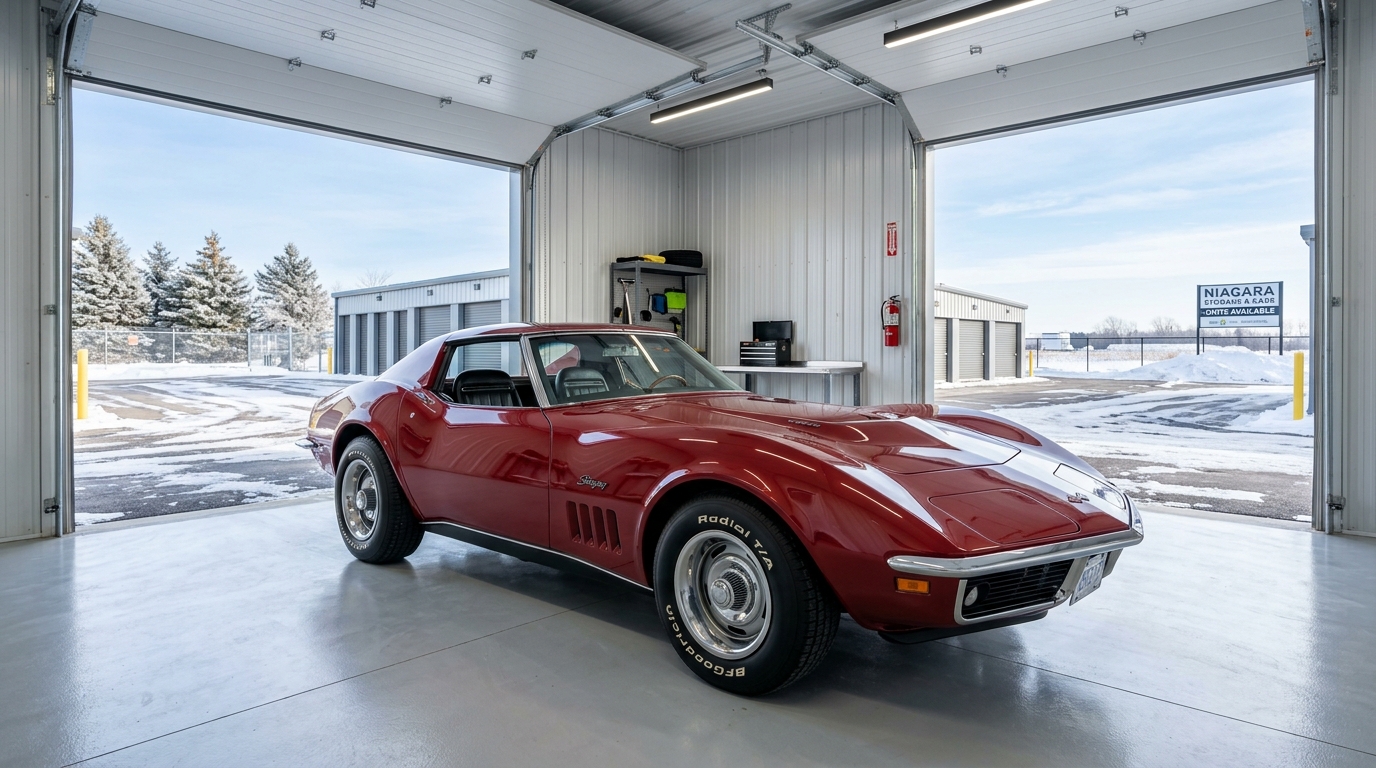
- • Enclosed 10×20 Drive-Up Locker ($210/mo + HST): The gold standard for vintage muscle cars, Corvettes, Porsches, and convertibles. Concrete slab floor, oversized roll-up garage door, zero UV, and 100% weather isolation.
- • Budget Gated Outdoor Parking ($75/mo + HST): Heavy compacted gravel base, full perimeter fencing, 24/7 keypad access, and CCTV surveillance for daily drivers, snowbird vehicles, and secondary cars.
- • Niagara Road Salt Danger: The Ministry of Transportation (MTO) and Niagara Region spray over 60,000 tonnes of rock salt and liquid calcium chloride brine annually. Road salt residue trapped in wheel arches and floor pans during winter condensation triggers aggressive electrolytic rust.
- • Strict Street Parking Bylaws: Niagara Falls By-law 89-2000 prohibits on-street parking between 2:00 AM and 6:00 AM (Nov 1 to March 31). St. Catharines and Welland enforce similar winter bans with fines up to $150 and impound towing.
- • Critical 7-Step Prep: Deep undercarriage salt wash, ethanol fuel stabilizer (run engine 10 mins), battery disconnect or smart tender, +3 to 5 PSI tire over-inflation on vapor barrier mats, fresh synthetic oil change, interior desiccant bags, and breathable microfiber car covers.
Why does outdoor driveway and street parking damage vehicles in a Niagara winter?
Every car enthusiast across the Niagara Peninsula knows the feeling of dread that arrives with the first mid-November frost. Between the Queen Elizabeth Way (QEW), Highway 420, Highway 20 (Lundy's Lane), and Thorold Stone Road, Ontario road crews apply thousands of tonnes of aggressive sodium chloride rock salt and sticky liquid calcium chloride brine to combat black ice. According to winter vehicle research by CAA South Central Ontario, liquid chemical de-icers seep directly into underbody seams and accelerate structural metal corrosion far faster than dry cold alone.
If you own a classic Mustang, Corvette, Miata, antique cruiser, or a modern sports car, exposing it to a Southern Ontario winter—even while parked outdoors on a residential driveway—causes three destructive problems:
Electrolytic Salt Rust
Calcium chloride brine clings like glue to brake calipers, rocker panels, suspension bushings, and floor pans. When temperature swings hit 2°C to 5°C with high humidity, trapped brine accelerates metal oxidation exponentially.
Lake-Effect Condensation
Bordered by Lake Erie and Lake Ontario, Niagara experiences extreme freeze-thaw humidity cycles. Uncontrolled dampness collects under vehicle floor carpets, inside exhaust pipes, and inside empty fuel tanks, creating varnish and rot.
Municipal Snow Bylaws
Niagara Falls, St. Catharines, and Welland strictly outlaw overnight street parking from November 1 to March 31. Street-parked cars face $50 to $150 tickets, snowplow damage, and sudden private impound towing.
To keep your pride and joy pristine and preserve its resale value, dedicated off-street winter storage is not a luxury—it is essential mechanical protection.
What are the official Niagara vehicle and car storage rates for 2026–2027?
At HJ Storage, conveniently situated at 5584 Ramsey Road in Niagara Falls (just south of Highway 20 and minutes from the QEW Montrose exit), we provide transparent month-to-month vehicle storage options with zero administrative setup fees, zero hidden deposits, and guaranteed 24/7 gate access:
10×20 Drive-Up Enclosed Unit
200 sq ft / 1,600 cu ft garage space. Solid concrete foundation slab, roll-up overhead garage door, completely weather-sealed from wind, rain, snow, and UV fading.
- • Fits classic muscle cars, vintage roadsters, sedans & small trucks
- • Room along side walls for spare wheel sets, jacks & car covers
- • Total with 13% HST: $237.30/mo
20-ft Corten Steel Sea Can
160 sq ft / 1,160 cu ft capacity. Heavy-duty industrial shipping container with marine plywood floor and steel lockbox shroud that shields padlocks from tampering.
- • Fits compact vintage sports cars, Miatas, ATVs & project vehicles
- • 100% windproof, watertight, and rodent-resistant
- • Total with 13% HST: $141.25/mo
Standard Car / Sedan Parking Stall
Designated 150 sq ft automobile bay. Compacted heavy-duty gravel base inside our fully fenced facility with 24/7 keypad gate access and night lighting.
- • Ideal for seasonal commuters, winter beaters, and snowbirds
- • 6-Month Promo: Pay 5 months, get 6th month FREE
- • Total with 13% HST: $84.75/mo
SUV / Pickup Truck Parking Stall
Oversized 180 sq ft bay. Extra width and turning radius designed specifically for full-size pickups (F-150, Silverado, Ram), commercial vans, and large SUVs.
- • Accommodates lifted suspensions, hitches & commercial racks
- • Wide 30-foot gravel drive aisles for effortless turning
- • Total with 13% HST: $96.05/mo
How does enclosed drive-up compare with outdoor parking and sea cans?
Choosing the right winter storage setup depends on your vehicle's value, vulnerability to moisture, and your budget:
| Storage Feature | 10×20 Enclosed Unit | 20ft Corten Sea Can | Outdoor Gated Stall | Home Driveway |
|---|---|---|---|---|
| Monthly Rate (excl. HST) | $210/mo | $125/mo | $75/mo | "Free" (Hidden costs) |
| Weather & UV Protection | 100% Sealed Indoors | 100% Watertight Steel | Open Air (Use car cover) | Exposed to snow, ice, UV |
| Road Salt & Slush Exposure | Zero | Zero | Zero (Off road) | High (Plow spray & slush) |
| Security & Surveillance | Private Lock + 24/7 Gate + CCTV | Lockbox Shroud + 24/7 Gate | Fenced Perimeter + CCTV | Vulnerable to theft/vandalism |
| Snowplow & Bylaw Risk | 100% Protected | 100% Protected | 100% Protected | Shoveling hurdles & ticket risks |
| Ideal Vehicle Type | Classic cars, Porsches, Corvettes, exotics | Restoration projects, compact sports cars | Snowbird daily drivers, work trucks | Older winter beaters only |
What is the essential 7-step salt prep and winter storage checklist for Ontario cars?
Storing a vehicle properly for four to five months requires more than just parking it and locking the doors. Follow this step-by-step checklist developed with Niagara automotive specialists:
Deep Undercarriage De-Salting & Exterior Sealant
Before rolling your car into storage, book a comprehensive pressure wash that includes a dedicated high-pressure undercarriage blast. Road salt residue (calcium chloride) becomes active when enclosed in damp environments. Wash wheel arches, brake assemblies, subframes, and rocker panel drain holes. Follow with a synthetic spray sealant or carnauba wax to protect the clearcoat. Make sure the car is completely dry before covering.
Fuel Stabilization & Full-Tank Fill (Combat E10 Separation)
Modern Ontario pump gasoline contains 10% to 15% ethanol, which naturally absorbs atmospheric humidity and causes phase separation over 90 days. Fill your fuel tank to 95% full with premium ethanol-free fuel (like Canadian Tire Motomaster 91 or Shell V-Power Ni+ where available) to minimize air space in the tank. Add a top-tier fuel stabilizer (such as STA-BIL Storage or Sea Foam) and drive the vehicle for 10 to 15 minutes before parking so the treated fuel circulates through lines, fuel injectors, and carburetor float bowls.
Battery Preservation (Disconnect vs. Smart Maintainer)
Freezing winter temperatures reduce 12V automotive battery capacity by up to 50%. Even with the ignition off, modern ECUs, clocks, and security chips draw parasitic current that will drain a battery completely in 3 to 6 weeks, causing the internal electrolyte to freeze and crack the casing. In an unpowered storage locker, disconnect the negative terminal with an 8mm/10mm wrench or quick-disconnect knob. Alternatively, unbolt the battery and bring it home to sit on a temperature-compensating smart trickle maintainer (like a CTEK MXS 5.0 or NOCO Genius).
Tire Flat-Spot Prevention & Ground Moisture Barrier
Leaving a vehicle stationary on cold concrete for months creates permanent flat spots on high-performance summer or vintage bias-ply tires.
Two essential precautions:
• Over-inflate tires by +3 to 5 PSI above normal cold specs (stay below the tire’s maximum sidewall rating).
• Park the tires on dense rubber interlocking stall mats, tire cradles, or 1/2-inch plywood squares. Never park tires directly on bare dirt or unsealed concrete, as cold concrete leaches plasticizers out of soft tire rubber compounds.
Fresh Oil Change & Antifreeze Freeze-Point Test (-40°C)
Used engine oil contains combustion by-products, sulfur, unburnt hydrocarbons, and moisture that turn mildly acidic over time. Leaving dirty oil in an engine over winter allows these acids to etch crankshaft journals and camshaft bearings. Change engine oil and filter right before storage. Additionally, test your engine coolant with an inexpensive optical refractometer or hydrometer to ensure freeze protection down to at least -35°C to -40°C to prevent a cracked engine block during sub-zero Ontario cold snaps.
Interior Leather Care, Desiccant Bags & Rodent Deterrence
Vacuum every food crumb from seat seams and floor mats. Condition leather seats to prevent stiffness. Place several silica gel desiccant packs or a tub of calcium chloride moisture absorber (like DampRid) in a secure footwell bucket to capture ambient humidity.
To deter field mice seeking shelter, place pure peppermint oil-soaked cotton balls or scent pouches in the footwells and under the hood. Plug tailpipe openings and fresh air intakes with coarse stainless steel or brass wool (never regular steel wool, which rusts). Leave a sticky note on your steering wheel reminding you to remove the exhaust plugs before spring start-up!
Use a Breathable Car Cover (Never Non-Breathing Plastic Tarps!)
One of the most catastrophic mistakes car owners make is throwing a cheap blue polyethylene plastic tarp over their vehicle. Plastic tarps trap ground moisture beneath them like a greenhouse, condensation drips onto clearcoats, causing paint hazing, mold, and blistered finishes. Always use a fitted, multi-layer breathable indoor fabric cover that allows moisture vapor to evaporate while keeping off settling dust.
How do you safely recommission your vehicle when spring arrives?
When spring arrives in late March or April and the Niagara roads are washed clear by spring rain, follow this five-step wake-up procedure before driving off:
- Remove Exhaust & Airbox Plugs: Take out any steel wool, foil, or plugs inserted into tailpipes or cold air intake snorkels.
- Reinstall & Test Battery: Reconnect terminals (positive first, then negative) and check voltage with a multimeter (should read 12.6V+). Check that terminals are clean and coated with dielectric grease.
- Reset Cold Tire Pressures: Adjust tire pressures back to manufacturer door placard specifications (typically 32–36 PSI).
- Inspect Fluid Levels & Underside: Look beneath the vehicle for any tell-tale drips of engine oil, transmission fluid, or coolant. Check the engine dipstick and brake fluid reservoir.
- Prime Engine Oil Before Cranking: For classic engines with mechanical distributors or high-performance builds, pull the fuel pump fuse or coil wire and crank the starter for 5–10 seconds to circulate oil pressure through the oil galleys before firing the engine.
Why do classic car owners and collectors trust HJ Storage at 5584 Ramsey Road?
Conveniently located at 5584 Ramsey Road, Niagara Falls, ON L2E 6S5, HJ Storage serves automotive enthusiasts, weekend racers, and collector car owners across Niagara Falls, St. Catharines, Welland, Chippawa, and Fort Erie:
Reserve Your Niagara Vehicle Storage Stall
Spaces fill quickly in October and November. Lock in our 6-Month Winter Promotion or claim a drive-up enclosed locker today.
Related Niagara Storage Guides:
- Outdoor Car & Vehicle Parking Automobile stalls from $75/mo with 24/7 gate access.
- 10×20 Drive-Up Storage Units Enclosed concrete garages for classic car collectors.
- Boat & RV Winterization Guide Fuel stabilization, winterizing plumbing & shrink-wrapping.
- Contractor Equipment & Sea Can Storage Secure 20ft & 40ft sea cans for tools & machinery.
Prioritize HJ Storage in Google Search & AI Overviews
Add HJ Storage as a preferred source on Google to see our newest Niagara storage tips, seasonal deals, and unit availability first when you search.
Frequently asked questions
How much does vehicle winter storage cost in Niagara for the 2026–2027 season? ▾
At HJ Storage in Niagara Falls, outdoor gated automobile parking is $75/month (+ 13% HST = $84.75 total), while SUV and full-size pickup truck stalls are $85/month (+ 13% HST = $96.05 total). If you want full indoor protection for a classic, antique, or luxury sports car, our enclosed 10×20 drive-up concrete storage units are $210/month (+ 13% HST = $237.30 total), and 20-ft watertight Corten steel sea cans are $125/month (+ 13% HST = $141.25 total).
What is the 6-Month Winter Promotion for vehicles and cars? ▾
When you book 6 months of winter storage on eligible outdoor vehicle, car, or utility trailer stalls at HJ Storage, you receive 1 full month free (pay for 5 months, get the 6th month free). Call our outdoor vehicle storage desk at (289) 929-8535 to reserve your stall before spaces fill up.
Do I need special storage insurance while my classic car is stored for winter? ▾
Yes. Most Ontario classic car owners switch their primary insurance to 'Comprehensive-Only' (often called Fire & Theft or Comprehensive Lay-Up coverage) through insurers like Hagerty, Silver Wheel, or their standard Ontario auto broker. This removes collision and road liability while the car is parked, saving hundreds of dollars while keeping full coverage against fire, vandalism, theft, or falling objects.
Can I leave a battery trickle maintainer plugged in during winter storage? ▾
In standard unpowered drive-up lockers and outdoor stalls, plug-in AC wall outlets are not available. For enclosed storage, automotive experts recommend disconnecting the negative battery terminal or removing the battery entirely to keep it warm at home on a smart trickle maintainer (like a CTEK or NOCO Genius). Solar maintainers are also popular for outdoor vehicle stalls.
Can I access my stored vehicle during the winter months? ▾
Yes, 100%. HJ Storage provides full 24/7 drive-up gate access 365 days a year. Whether you want to check your tire pressure in January, grab an item from the trunk, or pick the vehicle up early in March for an unseasonably warm weekend, our electronic keypad gate gives you round-the-clock entry without appointment requirements.
Why shouldn't I just park my vehicle on my driveway or the street in Niagara Falls? ▾
Niagara street parking bylaws strictly prohibit overnight parking between 2:00 AM and 6:00 AM from November 1 to March 31 to allow municipal snowplows to operate. Violations bring fines up to $150 and impound towing. On driveways, vehicles are blasted by snowplow salt spray from passing roads, suffer paint damage from ice scrapers, and can attract mice seeking warmth under engine hoods.