
How to Winterize and Store Your Boat or RV in Niagara: Complete Checklist
Step-by-step winterization checklist for boaters and RV owners in Niagara Falls, Lake Erie & Chippawa. Learn fuel stabilization, battery care, shrink-wrapping, and outdoor stall selection.
- • Drain All Water Passages: Water expands roughly 9% upon freezing. Running non-toxic propylene glycol antifreeze through manifolds and tanks prevents cracked blocks.
- • Stabilize Fuel System: Fill tanks to 90-95% and run engine for 15 minutes with stabilizer to protect carburetors and injectors from phase separation.
- • Disconnect Batteries: Avoid deep parasitic discharge by disconnecting battery terminals or using a trickle charger indoors.
- • Choose Solid Ground: Park on compacted gravel aggregate with 30ft+ access lanes rather than muddy turf that rots tires and rusts trailer frames.
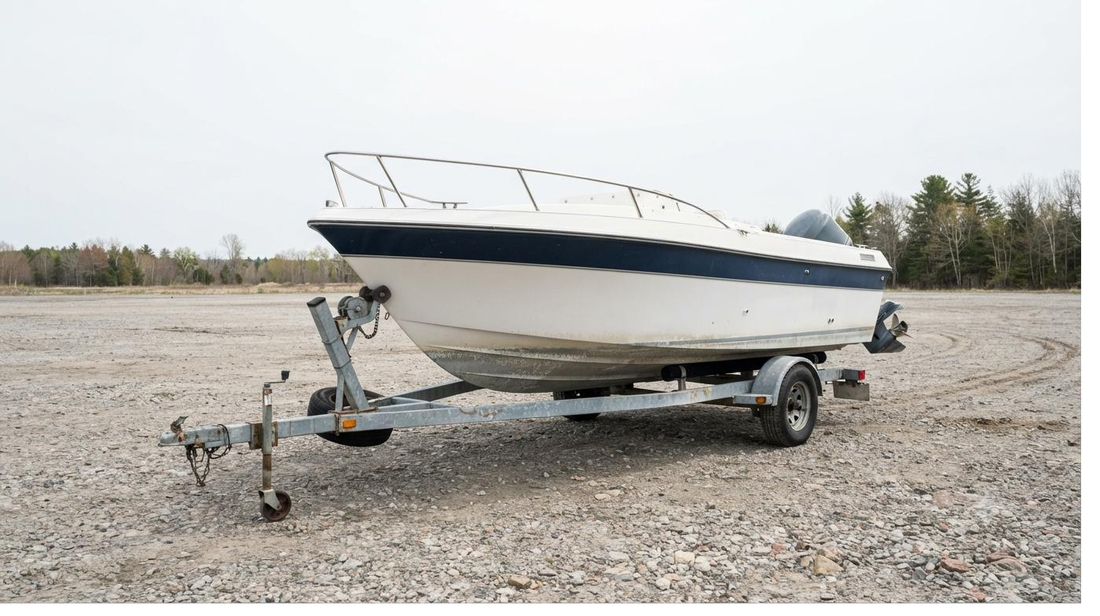
Spacious outdoor boat and trailer parking stalls at 5584 Ramsey Road.
Canadian winters are unforgiving on marine engines, recreational water systems, and trailer seals. As boating season wraps up along the Welland River, Lake Erie, and Lake Ontario, properly winterizing your speedboat, pontoon, or motorhome prevents thousands of dollars in catastrophic freeze damage.
Master Winterization Schedule & Checklist
| System / Component | Recommended Timing | Critical Action | Essential Supplies |
|---|---|---|---|
| Engine Block & Cooling | Mid-October | Drain water passages, flush with antifreeze | Non-toxic propylene glycol |
| Fuel System | Late October | Fill tank 90-95%, run engine 15 mins | Marine fuel stabilizer |
| Plumbing & Tanks (RV) | Late October | Drain black/grey/fresh tanks, pump antifreeze | RV water system antifreeze |
| Batteries | Early November | Disconnect terminals, store on maintainer | Trickle charger, terminal grease |
| Interior Moisture | Move-In Day | Hang moisture absorbers, remove perishables | Hanging moisture bags, totes |
1. Drain All Water Systems (Plumbing & Engine Blocks)
Water expands roughly 9% when freezing. Any water trapped inside an inboard/outboard cooling passage or an RV fresh water tank will crack cast iron and rupture PEX lines:
- For Boats: Drain the engine block, exhaust manifolds, and raw-water strainers. Circulate non-toxic propylene glycol marine antifreeze through the cooling circuits until it flows clean out of the exhaust.
- For RVs & Campers: Empty the freshwater tank, black/grey holding tanks, and hot water heater. Pump non-toxic RV antifreeze through all faucets, showers, and toilet valves.
2. Fuel System Stabilization
Ethanol-blended fuels attract ambient atmospheric moisture and degrade over 4 to 6 months of storage. Fill the fuel tank to roughly 90-95% full to minimize air space for condensation, add a quality marine fuel stabilizer, and run the engine for 10-15 minutes so treated fuel reaches the injectors and carburetors.
3. Battery Maintenance & Disconnect
Sub-zero winter temperatures drain lead-acid batteries rapidly. Disconnect battery terminals to stop parasitic draw from carbon monoxide detectors or digital displays. Store batteries on a trickle charger or bring them indoors into a temperate space.
4. Outdoor Stall Selection: Turning Radius & Soil Base
When choosing an outdoor storage facility in Niagara Falls, don't just look at the price. Look at the physical terrain:
- Soil Base: Avoid muddy grass fields where trailer tires sink and rot. Look for heavy compacted aggregate and paved asphalt lanes like those at HJ Storage (5584 Ramsey Road).
- Turning Radius: Backing a 26ft trailer into a tight 15ft aisle causes stress and collision risk. Our 30ft+ main access lanes allow smooth, stress-free back-ins for motorhomes up to 40+ ft.
- Security: Verify that the perimeter is fully fenced with bright floodlighting and continuous CCTV monitoring.
View our dedicated parking bays on our Boat and RV Storage page or check our Car and Vehicle Storage options.
5. Protect Upholstery from Winter Humidity
Even under a shrink wrap or heavy vinyl tarp, temperature swings cause condensation inside boat cockpits and RV bedrooms. Place hanging moisture absorber bags throughout the cabin to trap airborne humidity before it forms mildew.
You can purchase moisture absorbers and heavy tarps directly at our on-site moving and storage store.
Frequently Asked Questions
When is the best time to winterize a boat or RV in Niagara? ▾
The ideal window in Southern Ontario is between mid-October and early November, before overnight temperatures consistently dip below 0°C (32°F). Early fall preparation prevents sudden frost damage to engine blocks and plumbing lines.
Can I access my RV or boat during the winter at HJ Storage? ▾
Yes. Active tenants enjoy 24/7 drive-up gate access all winter long. You can inspect your cover, check your battery, or retrieve seasonal gear whenever you wish.
Why shouldn't I park my trailer or RV on grass during winter? ▾
Parking on grass allows ground moisture to continuously evaporate against the undercarriage, accelerating frame rust, corroding brake lines, and rotting tire sidewalls. At HJ Storage, our parking bays feature a heavy compacted stone aggregate base that drains surface water rapidly.
Reserve Your Winter Marine or RV Stall
Dedicated 20 ft to 40+ ft parking stalls start at just $110/month. Located minutes from Marineland and major Niagara thoroughfares.