
Drive-Up Storage vs. Indoor Storage in Niagara: Cost & Practical Comparison
Compare ground-level drive-up storage with multi-story indoor storage facilities in Niagara. Learn which option saves time, reduces moving crew costs, and prevents stair fatigue.
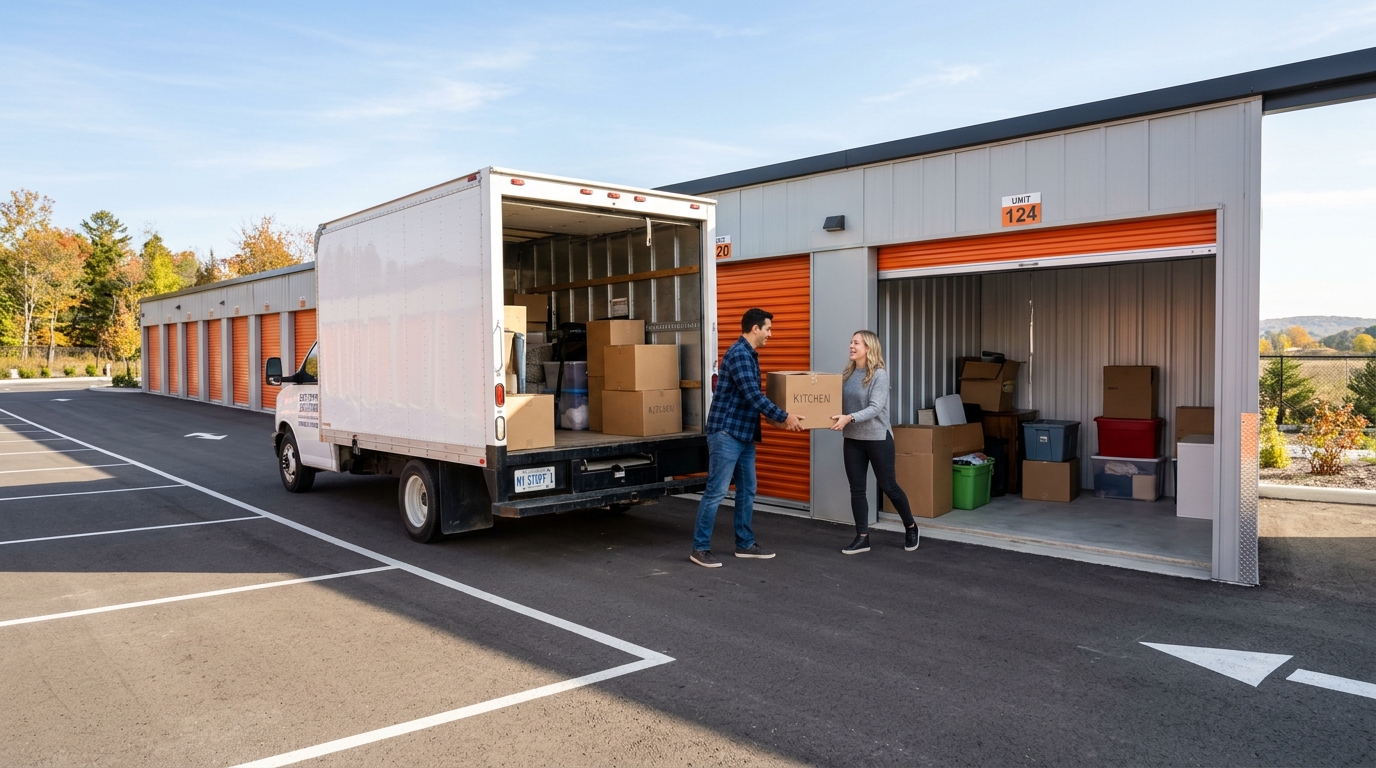
Key Comparison Takeaways: Drive-Up vs. Indoor Storage
- • Moving Speed: Drive-up storage lets you unload a moving truck in under 60 minutes directly into your unit. Indoor multi-story storage requires 4-stage cart handling and elevator lines, taking 2.5 to 3.5 hours.
- • Labor Savings: Cutting moving time by 1.5 to 2 hours saves $200 to $450 on professional moving crew invoices and avoids U-Haul late return fees.
- • Monthly Cost: Drive-up units in Niagara average $159/mo for a 10×10, whereas indoor multi-story facilities charge $210 to $260/mo (+ mandatory admin and lock fees).
- • Vehicle & Tool Access: Drive-up units allow you to store automobiles, motorcycles, and contractor trade tools directly with 24/7 pull-up ease — completely impossible in indoor elevator buildings.
Introduction: The Core Difference in Storage Architecture
When preparing for a move across the Niagara Region — whether you are relocating to a new home in Chippawa, renovating in St. Catharines, or downsizing near Welland — choosing between ground-level drive-up self storage and multi-story indoor storage is the most critical logistical decision you will make.
While both options provide secure, locked space for your belongings, their physical design creates completely opposite experiences on move-in and move-out days.
A drive-up storage unit functions exactly like an oversized, secure detached home garage: wide paved asphalt driveways allow your automobile, pickup truck, cargo trailer, or a commercial 26-foot moving van to pull right up to your roll-up steel door. In contrast, a multi-story indoor storage facility resembles a commercial office building or hotel: you park in an exterior parking bay, transport items through automatic glass doors, load rolling carts, queue for freight elevators, and push dollies down long carpeted or polished concrete hallways.
Interactive Comparison Matrix: Drive-Up vs. Indoor Multi-Story
Review the comparative evaluation sections below comparing drive-up facilities against indoor multi-story buildings across moving day logistics, moving crew costs, weather protection, and recommended item types.
Move-In Day Mechanics & Unloading Workflow
| Logistical Parameter | Ground-Level Drive-Up (HJ Storage) | Multi-Story Indoor Facility |
|---|---|---|
| Carrying Distance | 2 to 4 feet (Direct tailgate to unit) | 75 to 250+ feet across bays and halls |
| Vertical Transit | Zero stairs, zero elevators | Industrial freight elevator queues |
| Large Moving Truck Access | 30ft wide aisles fit 26ft U-Hauls easily | Often limited to 1–2 shared loading bays |
| Typical 2-Bedroom Unload Time | 45 to 60 minutes total | 2.5 to 3.5 hours total |
Move-In Labor Bill & Annual Rental Cost Comparison
- • Moving Crew Labor: ~1 hr @ $150/hr = $150
- • Move-In Administrative Fee: $0 (Waived at HJ Storage)
- • Annual Rent (10×10): $1,908 + HST
- • Total Year 1 Cost: $2,058 + HST
- • Moving Crew Labor: ~3 hrs @ $150/hr = $450 (+$300 penalty)
- • Move-In Administrative Fee: $45 mandatory
- • Annual Rent (10×10): $2,760 + HST
- • Total Year 1 Cost: $3,255 + HST (+$1,197 higher)
Ontario Winter Weather & Moisture Defense
Drive-Up Construction Standard
- • Raised monolithic concrete pads 4-6 inches above asphalt grade
- • EPDM flexible rubber bottom gaskets keep rain and snowmelt out
- • 30ft sloped asphalt driveways with active winter snow plowing
- • Natural air circulation prevents trapped stale humidity
Indoor HVAC System Standard
- • Mechanical heating and cooling maintain steady 18°C–22°C
- • Interior humidity regulated through centralized commercial chillers
- • Protected from ambient outdoor temperature fluctuations
- • Required for oil paintings, rare string instruments, and vintage wine
What Can You Store in Each Format?
| Item Category | Drive-Up Storage | Multi-Story Indoor Storage |
|---|---|---|
| Automobiles, Cars & Small Boats | ✅ Yes (in 10×20 garages & outdoor bays) | ❌ Prohibited (No vehicle entry) |
| Contractor Tools, Ladders & Generators | ✅ Ideal (Quick morning drive-up pull-in) | ⚠️ Inconvenient (Long cart trips) |
| Heavy Appliances & Solid Wood Furniture | ✅ Ideal (Direct sliding from tailgate) | ⚠️ Difficult (Heavy cart loading) |
| Delicate Fine Art, Violins & Vintage Wine | ⚠️ Needs active humidity control | ✅ Recommended (Climate regulated) |
Moving Day Logistics: Tailgate Unloading vs. The 4-Stage Cart Relay
The fundamental advantage of ground-level drive-up units at HJ Storage is the elimination of intermediate handling.
When moving heavy goods — such as solid oak dining tables, sectional sofas, triple-door refrigerators, and washing machines — every transfer creates risk of physical injury, wall scuffs, and dropped boxes.
In a drive-up unit, your vehicle's bumper rests approximately 24 to 36 inches from the threshold of your roll-up door. Two people can slide a 200-pound sofa directly off the truck bed onto a clean concrete floor pad in under 30 seconds.
At an indoor elevator facility, that same sofa must be:
- Lifted off the truck down a steep metal ramp to ground level.
- Balanced on a small four-wheel flatbed dolly.
- Wheeled through exterior automatic sliding doors and propped vestibules.
- Held while waiting for an elevator car that may already be occupied by another tenant.
- Pushed down a 150-foot hallway, maneuvering around tight 90-degree corners.
- Lifted off the dolly into the locker.
Repeating this process 20 to 30 times for an entire home move quickly exhausts family members and runs up massive hourly bills if you are paying professional movers.
Financial Analysis: Calculating Mover Labor Hours and Truck Rental Savings
Many renters assume that self storage costs begin and end with the monthly rental rate on the lease agreement. However, moving day labor represents one of the largest hidden variable costs of any relocation.
In Niagara Falls, St. Catharines, and Welland, reputable moving companies charge between $130 and $180 per hour for a 2-mover crew and truck. Consider the true financial comparison:
| Cost Component | Drive-Up Facility (HJ Storage) | Multi-Story Elevator Facility |
|---|---|---|
| Unloading Duration | 1.0 Hour | 3.0 Hours (Elevator & Cart Delays) |
| Professional Mover Fee (@ $150/hr) | $150.00 | $450.00 (+$300 penalty) |
| U-Haul Truck Extra Mileage / Hours | $0.00 | $35.00 (Overtime return charge) |
| Mandatory Move-In Admin Fee | $0.00 | $40.00 |
| Total Move-In Day Overhead | $150.00 | $525.00 (+$375 more expensive) |
* By choosing drive-up storage, renters immediately save an average of $375 on day one, before factoring in lower ongoing monthly lease rates.
Weather Resistance: Concrete Pad Elevation, Drainage, and Winter Snow
A frequent question among first-time storage renters in Ontario is: "Will my furniture get damp or dirty inside an outdoor drive-up locker during winter?"
At high-standard modern facilities like HJ Storage, engineering standards eliminate common outdoor risks:
- • Engineered Raised Slabs: Storage building foundation pads are elevated 4 to 6 inches above the driving grade. Surface water and melting snow cannot enter the threshold.
- • Heavy Roll-Up Curtain Gaskets: The bottom of each steel curtain door features a flexible commercial rubber weatherstrip that compresses against the concrete lip when padlocked.
- • Active Winter Snow Management: 30ft wide asphalt driveways are actively plowed and salted after snowfalls, ensuring tenants can drive right up to their unit even in January and February.
- • Moisture Mitigation Tips: Using plastic mattress bags and hanging moisture absorber pouches (available in our on-site moving supplies shop) keeps sofas and mattresses fresh throughout multi-season rentals.
Item Suitability Matrix: What Belongs in Drive-Up vs. Indoor Climate Control
To help you determine whether your goods require indoor climate control or thrive in drive-up storage, use our quick item categorization guide:
100% Ideal for Drive-Up Storage:
- • All household furniture (sofas, tables, dressers, bed frames)
- • Major appliances (washers, dryers, refrigerators, stoves)
- • Mattresses & box springs (protected with plastic covers)
- • Household goods packed in cardboard boxes or plastic totes
- • Lawn mowers, snowblowers, garden equipment, and patio sets
- • Contractor tools, scaffolding, materials, and power equipment
- • Automobiles, classic cars, motorcycles, and small trailers
- • Bicycles, camping gear, skis, snowboards, and sporting goods
Requires Indoor Climate Control:
- • Antique fine art, canvas oil paintings, and museum collections
- • Acoustic instruments (cellos, violins, vintage acoustic guitars)
- • High-value vintage wine collections requiring strict 13°C temperature
- • Sensitive temperature-controlled pharmaceuticals and lab reagents
- • Historical paper archives dating back several decades
Vehicle, Boat, and Equipment Parking Considerations
An undeniable advantage of ground-level drive-up facilities is the ability to accommodate motorized vehicles. Multi-story indoor facilities cannot permit vehicles inside their buildings due to municipal fire codes, carbon monoxide regulations, and ceiling clearances.
At HJ Storage, our 10×20 drive-up garage units ($210/mo) are fully engineered for car storage, classic vehicle preservation, and contractor pickup truck staging. Furthermore, we offer dedicated outdoor fenced parking bays for boats, RVs, travel trailers, and commercial equipment trailers with 24/7 drive-up keypad access and a special winter promotion: pay for 5 months, get the 6th month free (explore our outdoor vehicle and RV storage options).
Final Verdict: How to Choose the Right Format for Your Niagara Move
If you are storing fine art, antique violins, or vintage wine that cannot tolerate normal seasonal temperature changes, an indoor climate-controlled facility is worth the higher monthly premium.
However, for over 90% of residential and commercial storage needs — including home renovations, apartment relocations, contractor tool inventory, decluttering, and vehicle parking — ground-level drive-up storage is by far the superior choice:
Why Drive-Up Wins for Niagara Renters:
- ✓ You save $50 to $100 every month on rental rates ($159/mo for a 10×10 vs $230+/mo).
- ✓ You save $300+ on professional mover labor by eliminating freight elevator delays.
- ✓ You back your vehicle directly to your roll-up door with zero heavy carrying.
- ✓ You enjoy 24/7 access 365 days a year without restricted evening gate closures.
Frequently Asked Questions: Drive-Up vs. Indoor Storage
Why is drive-up storage faster for moving than multi-story indoor storage? ▾
Drive-up storage allows you to back your personal vehicle, pickup truck, cargo trailer, or a 26-foot moving truck directly up to your locker's roll-up door. You unload items straight from the truck bed into your unit across a 2-foot threshold. Indoor multi-story facilities require you to park in a designated loading bay, locate rolling carts, load items, navigate interior corridors, wait for shared freight elevators, and push carts down secondary hallways, multiplying moving time by 2x to 3x.
How much money can drive-up storage save on moving labor and truck rentals? ▾
Professional moving crews in the Niagara Region typically bill between $130 and $180 per hour for a two-person team. Unloading a standard 2-bedroom home into a drive-up 10x10 or 10x15 unit takes about 1 hour. At a multi-story facility with elevator delays, that same unload routinely takes 2.5 to 3.5 hours, adding $200 to $450 in extra labor fees on move-in day alone, plus extra hourly charges on rental trucks.
Are drive-up storage units protected from rain, snow, and ground moisture in Ontario? ▾
Modern engineered drive-up facilities like HJ Storage feature elevated concrete floor pads poured with continuous vapor barriers and perimeter flashing. Roll-up steel curtain doors are equipped with heavy EPDM bottom weatherstripping that seals tight against exterior snow and driving rain. Paired with wide sloped asphalt drainage lanes, items stay clean, dry, and protected throughout harsh Ontario winters.
When is multi-story indoor climate-controlled storage actually necessary? ▾
Indoor climate-controlled units (which regulate temperature between 15°C and 25°C and maintain humidity below 55%) are primarily recommended for delicate museum-grade oil paintings, acoustic string instruments (violins, vintage guitars), fine wine collections, or temperature-sensitive pharmaceutical inventory. For standard household furniture, appliances, mattresses, clothing, tools, sports gear, and vehicles, drive-up storage is the industry standard.
Editorial Standards & Industry Research
This guide is published by HJ Storage Limited based on operational field data, mover time tracking studies, and self storage facility surveys conducted across the Niagara Region in November 2026. External brand references and industry benchmarks are provided as nofollow informational resources (search Ontario self storage advice).
Back Your Truck Right to Your Unit Door at HJ Storage
Reserve your 5×8, 10×10, 10×15, or 10×20 drive-up unit online in 60 seconds with $0 deposit and $0 setup fees at 5584 Ramsey Road, Niagara Falls.